
[ad_1]
The zero emissions fuel that could one day power Toyota LandCruisers and HiLuxes into the outback, give farmers the confidence to traverse remote properties and allow adventurers to tow caravans and boats has taken its next big step.
Toyota today opened its Hydrogen Centre in Altona, Melbourne, near the site that once produced Australian-made cars, including the Camry Hybrid.
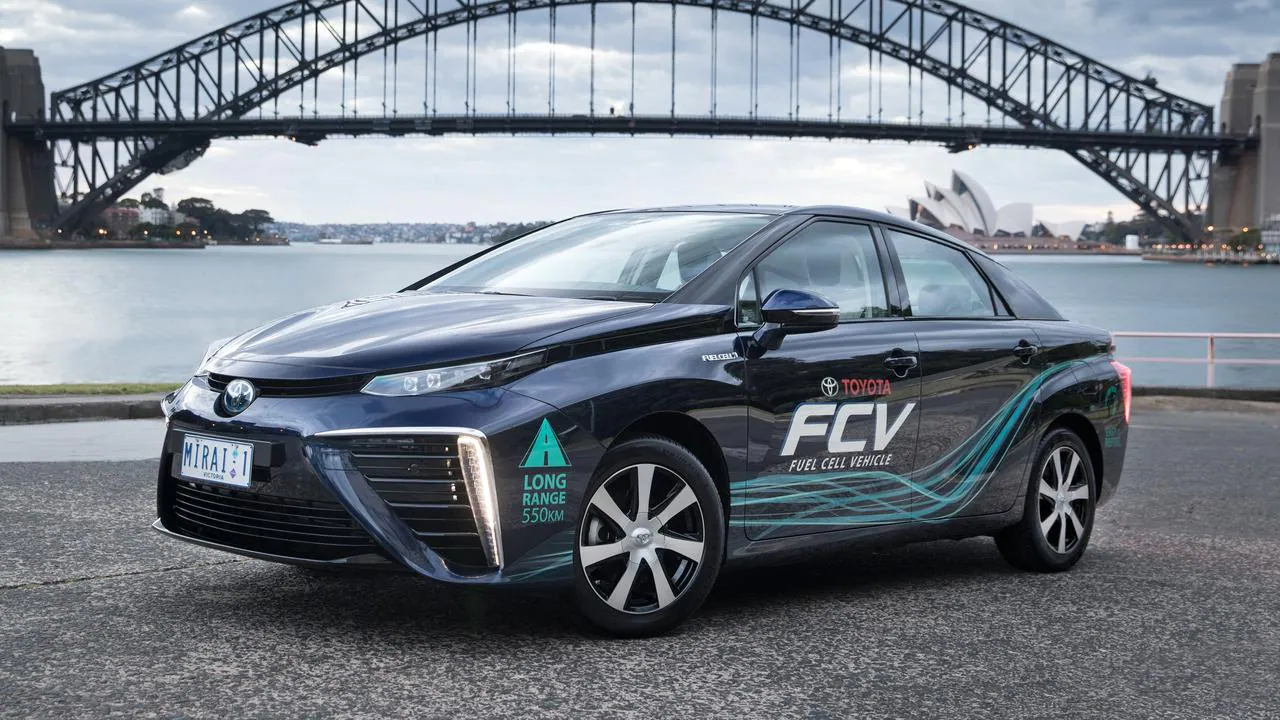
It includes the country’s largest hydrogen refuelling station – a single bowser with two pumps – to fuel a fleet of 20 Mirai fuel cell electric vehicles that are part of a trial to determine the viability of hydrogen as a fuel for vehicles in Australia.
The mid-sized Mirai can travel about 650km from 5kg of hydrogen stored in three carbon fibre tanks.
While Toyota has been slow with EVs – instead focusing on hybrids – the company sees hydrogen as part of its future.
“By promoting and developing fuel cell technology, Toyota believes hydrogen can play a central role in reducing emissions,” said Toyota Australia president and CEO Matthew Callachor.
Hydrogen fuel cell vehicles replace the large, heavy and expensive battery pack in EVs with hydrogen tanks.
That hydrogen is fed to a fuel cell, which combines hydrogen with oxygen to create electricity, the only emission being water. It then drives an electric motor.
They can be refuelled in about five minutes and typically have a greater range than EVs, something that holds appeal with those deterred by typically long charging times of electric vehicles.
“Hydrogen as an energy storing medium and fuel for transportation has enormous potential,” says Toyota Australia manager of future technologies and mobility Matt Macleod.
The Altona-based refilling station – which also incorporates a hydrogen education centre – is behind locked gates, but Toyota says it is available to the public and that it will even allow the rival Hyundai Nexo FCEV to fill from it.
The Nexo was the first FCEV to be certified for sale here and 20 will be stationed in Canberra using the only other public hydrogen refuelling station, not far from Parliament House.
The hydrogen at Toyota’s plant is produced on site from water using electrolysis with electricity sourced from solar arrays and the electricity grid.
FCEVs are seen as useful technology for heavy vehicles such as trucks and buses as well as vehicles used for long distance touring and towing, such as four- wheel drives and utes.
Toyota has the top selling ute in the country in the HiLux and sells more off-road SUVs than any other brand.
The company hasn’t nominated hydrogen fuel cell tech as the system that will power future LandCruisers, other than to say it “potentially” could make sense.
Instead, Toyota says FCEV applications will likely suit bigger vehicles that often carry heavy loads and travel big distances. Like LandCruisers …
Macleod says the EV/FCEV delineation depends on the application of the vehicle.
“If it’s a smaller vehicle with not a lot of range then battery electric is suited,” he says. “As soon as you get larger and start travelling further then things like hybrid and fuel cell start to get more interesting because you actually leverage more of the battery capacity you have.”
There’s currently one major issue with hydrogen: there’s almost nowhere to refuel.
While petrol can be bought at roughly 7000 stations around the country, hydrogen is currently limited to a single station in Canberra and Toyota’s just-opened facility in Melbourne.
More are planned, but they’re a drop in the ocean of petrol stations that has been built over more than a century of motoring.
But Callachor believes hydrogen won’t need the same broad spread of outlets, especially as many EVs in future will be recharged from home.
“I don’t know whether we need as many petrol stations on every corner,” he said.
[ad_2]
Source link